What Is a Wind Tunnel? How Aerodynamic Testing Works and What Gets Measured
A wind tunnel is a test facility that moves air at a controlled speed past a stationary object so that the aerodynamic forces, pressures, and flow patterns on that object can be measured. The principle is relative motion. It does not matter to the air whether the vehicle moves through still air or the air moves past a fixed vehicle, so the tunnel holds the model still, where instrumentation can reach it, and moves the air instead.
Wind tunnels are used to develop aircraft, road vehicles, race cars, trucks, drones, rockets, buildings, and individual components such as heat exchangers and engine inlets. Computational fluid dynamics has taken over a large share of design iteration, but tunnel testing remains the way CFD results are validated and the way real hardware is characterized before flight or road testing.
How a wind tunnel works
Every tunnel has a drive section that moves the air, a settling chamber and contraction that straighten and accelerate it, a test section where the model sits, and a diffuser that slows the air back down. Open-return tunnels draw air from the room and exhaust it back out. Closed-return tunnels recirculate the air in a loop, which gives better control of flow quality and temperature at the cost of size and expense.
Flow quality in the test section is what makes a tunnel useful. Turbulence intensity, velocity uniformity across the section, and flow angularity are all characterized and corrected for. Test-section walls influence the flow around the model, so wall corrections or slotted and adaptive walls are used to approximate free-air conditions.
Types of wind tunnels
Tunnels are usually classified by speed regime: subsonic, transonic, supersonic, and hypersonic. The flow physics change with Mach number, so each regime needs a different design. NASA Glenn Research Center notes that wind tunnels are usually designed for a specific purpose and speed range.
Subsonic tunnels cover most automotive, truck, motorsport, UAS, and general aviation work. Full-scale automotive tunnels are large enough to hold a production vehicle and often include a moving ground plane and rotating wheels to reproduce road conditions. Climatic tunnels add temperature and humidity control for cooling and HVAC-system development.
Transonic and supersonic tunnels serve high-speed aircraft, missile, and turbomachinery programs. They run intermittently from pressurized storage or continuously with very large compressors, and the instrumentation has to survive high dynamic pressures and, in some cases, high temperatures.
Specialized tunnels exist for specific measurements. Boundary layer tunnels study the flow near a surface. Icing tunnels spray supercooled water droplets to test ice accretion and protection systems. Propulsion tunnels run engines or powered models.
What gets measured
Forces and moments. A balance, either external or internal to the model, measures lift, drag, side force, and the three moments. This is the primary output for most vehicle programs.
Surface pressure. Pressure taps distributed over the model surface connect to a pressure scanner that reads dozens or hundreds of channels simultaneously. Surface pressure distributions show where lift is generated, where flow separates, and how a design change moves the loads.
Flow-field pressure and velocity. Flow probes placed in the flow measure total pressure, static pressure, and dynamic pressure at points around the model. Total pressure is what the flow would have if brought to rest. Static pressure is the ambient pressure in the moving stream. Their difference is dynamic pressure, and dynamic pressure gives velocity, as NASA Glenn’s beginner’s guide to dynamic pressure shows. For a closer look at how that measurement is made in practice, see our article on how dynamic pressure is measured in vehicle wind tunnels.
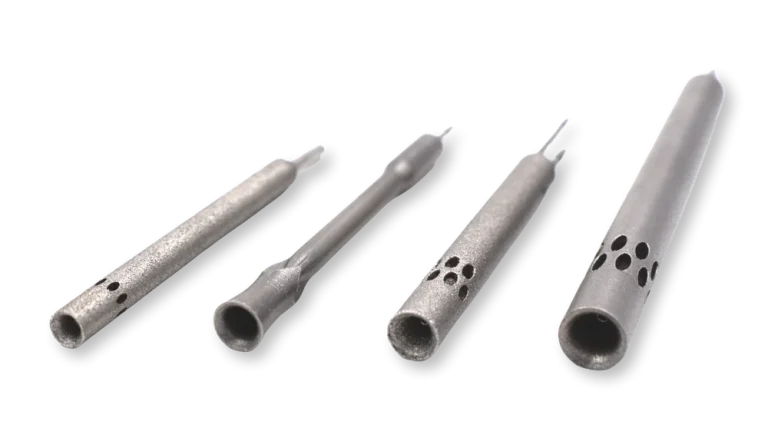
Flow angle. 5-hole and 7-hole multi-hole probes resolve the direction of the flow as well as its speed, which is how angle of attack, sideslip, and the three-dimensional flow behind a wing tip or a vehicle wake are mapped. Kiel probes are designed to hold total pressure accuracy across a wider range of flow angles than a standard pitot, roughly 50 degrees for a Kiel probe versus about 5 degrees for a pitot, depending on design. Our guide to flow probes and aerodynamic measurement in wind tunnel testing covers the probe types in detail.
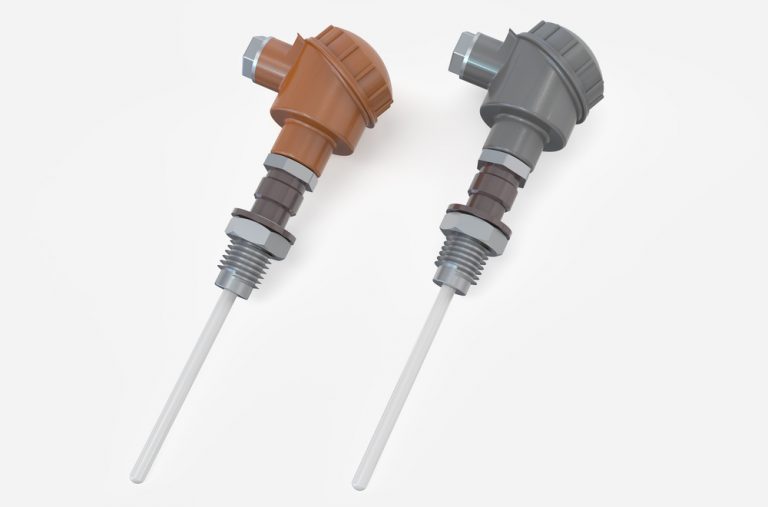
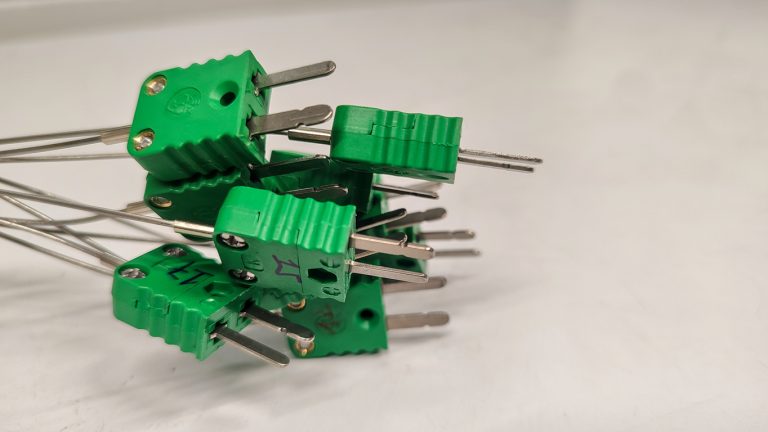
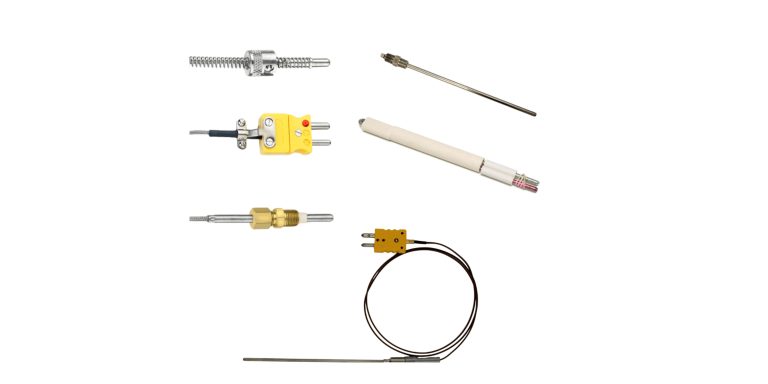
Temperature. Air temperature is an input to every density and velocity calculation, and it is a direct measurement objective in cooling, brake, and thermal management tests. Thermocouples and RTDs are placed in the flow, on the model, and in the tunnel circuit.
Flow visualization. Tufts, smoke, oil flow, and particle image velocimetry show the flow pattern qualitatively or quantitatively and are used to interpret what the pressure and force data are showing.
Why instrumentation determines test quality
A wind tunnel produces a controlled flow. It does not produce a measurement. The value of a test program is set by the probes, scanners, balances, and temperature sensors in the test section and by the calibration behind them.
Probe size matters because a probe that is too large disturbs the flow it is measuring. Probe calibration matters because a multi-hole probe’s output is only meaningful through a calibration map across speed and angle. Scanner accuracy and zero stability matter because a drift over a long run looks exactly like a design change. Temperature sensor placement matters because a thermocouple in the wrong location reports the wrong air.
Aerodynamic measurement hardware from K-Tec Systems
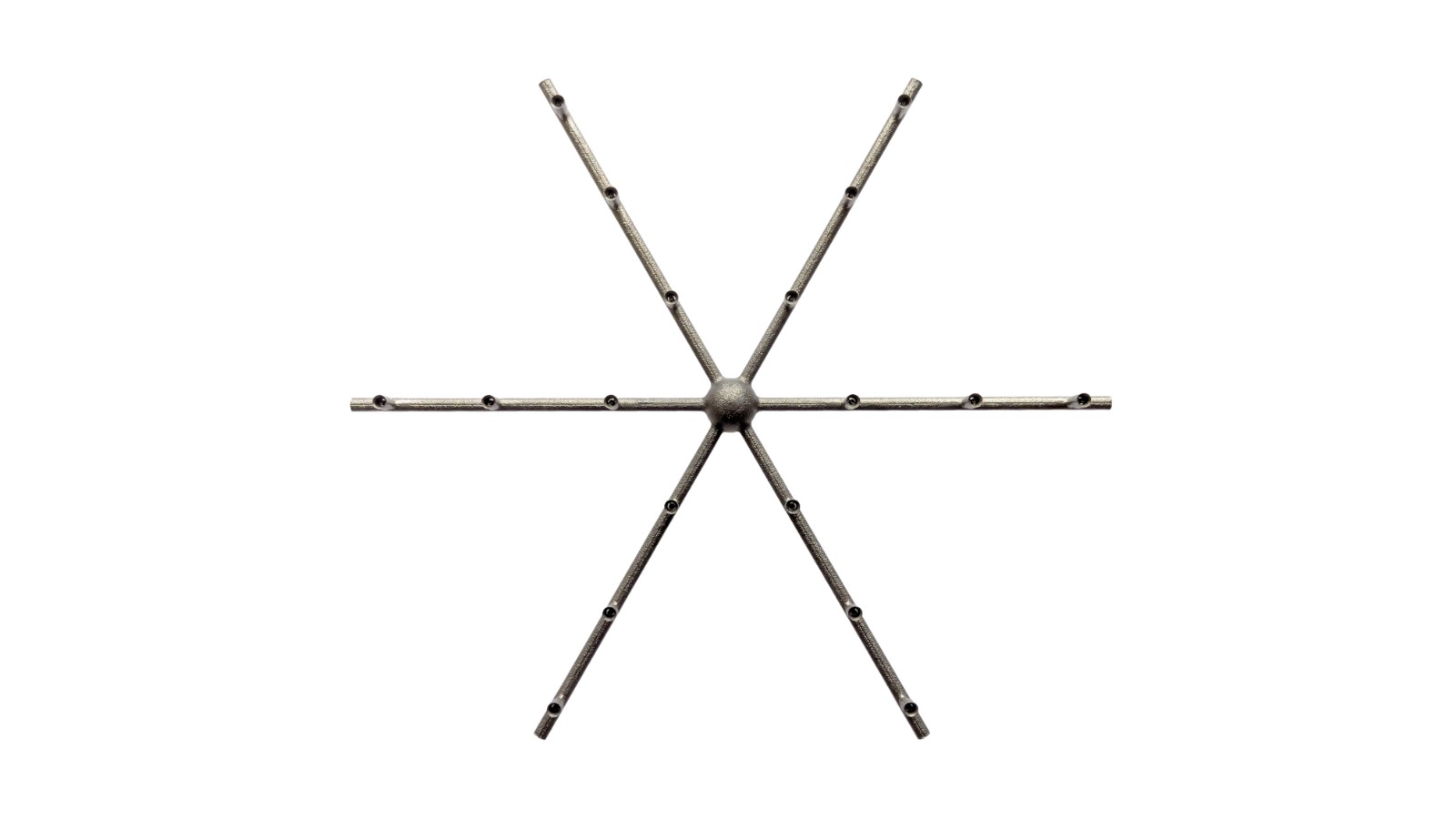
K-Tec Systems supplies the measurement hardware a wind tunnel program depends on, from several manufacturers rather than a single product line. Our range includes 5-hole and 7-hole probes, Kiel probes and rakes, and yaw pitots and digital pitot probes for flow-field measurement, and pressure scanners for multi-point surface pressure. We also manufacture custom thermocouples and RTDs that can be integrated directly into flow probes.
Working with more than one manufacturer lets us match the instrument to your test instead of fitting your test to a single catalog. Explore our aerospace and automotive measurement solutions, or discuss your tunnel program with our engineers at 248-414-4100 or contact@k-tecsystems.com.